WHAT’S NEW WITH THE FOX 38 IN 2026?
New Air Spring, Updated Chassis, and Refined Performance
Last year marked a major shift for Fox’s mountain bike fork lineup. We saw big updates to the 36, plus entirely new platforms like the 36 SL, 34 SL, and the inverted Podium. Along with those came GlideCore air springs, AI-optimized chassis designs, and increased bushing overlap—resulting in smoother, more sensitive forks without significant weight penalty.
Noticeably absent from all of that? The Fox 38.
First released in 2021, the 38 quickly became the benchmark for single crown enduro forks. It’s been the go-to choice for riders pushing hard on aggressive terrain, and despite only incremental updates over the years, it’s remained one of Fox’s best-selling forks.
So when Fox rolled out a full lineup overhaul in 2025 without touching the 38, it raised some questions. Was the 38 being phased out? Was the inverted Podium taking over?
Now we have our answer: the 38 isn’t going anywhere—and for 2026 (Model Year 2027, I know it makes no sense!), it finally gets the full update treatment.
EXTERNAL UPDATES TO THE FOX 38
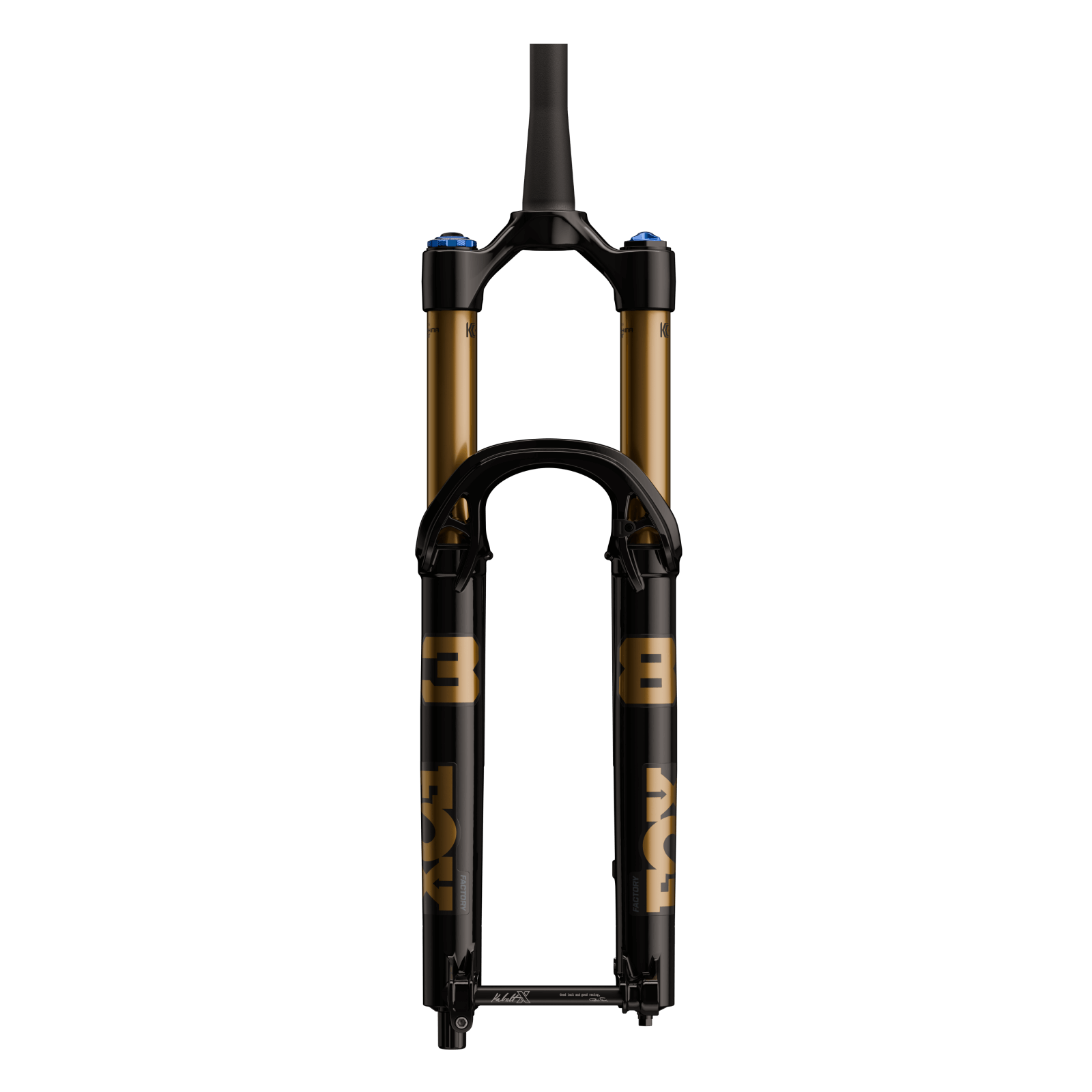
Much like the updated 36 platform, the Fox 38 receives a redesigned chassis focused on improving ride feel.
AI-Optimized Lower Legs & Increased Bushing Overlap

Fox continues to lean into generative design, using AI-assisted engineering to reshape the lower legs. The result is a chassis that balances strength, stiffness, and weight more efficiently.
A key change here is +20mm of bushing overlap, which plays a major role in reducing friction under load. More overlap = better alignment = smoother small bump sensitivity.
Refined Stiffness Profile
The new 38 isn’t just stiffer—it’s smarter about stiffness:
-
+8.8% increase in fore-aft stiffness
-
–6.8% reduction in torsional stiffness
That slight reduction in torsional rigidity is intentional. It introduces a bit more compliance in off-camber and technical terrain, improving traction and ride feel—similar to what riders experienced with the Podium.
Relocated Bypass Channels
Fox has moved the lower leg bypass channels from the rear to the inboard side of the fork, removing them from the primary load path. This reduces friction and wear while improving oil circulation for smoother operation over time.
Updated Bleeders & Mudguard
The 38 also gets:
-
Refined bleeder valves on the backside of the lower legs. These let you purge air that builds up in the lowers and keeps things running smoothly!
-
A redesigned bolt-on mudguard (no longer tied into the bleed ports). This is the same mud guard found on last year's 36. There are both long and short options depending on the amount of coverage you are looking for.

It’s a small quality-of-life update, but one that makes installation and maintenance noticeably easier.
INTERNAL UPDATES: DAMPER & AIR SPRING
The biggest performance gains come from inside the fork.
GRIP X2 Damper Refinements

With the release of the updated Fox 40 a few weeks ago, we also saw updates to the GRIP X2 damper. A quick refresher of those updates are…
-
New mid-valve piston and valve stack design
-
Revised bleed port and valve stack shapes for improved oil flow
-
More support without added harshness
You still get full 4-way adjustability (HSC, LSC, HSR, LSR), but with more defined click feedback and a broader usable tuning range.
GlideCore Air Spring Comes to the 38

One of the most important updates is the addition of the GlideCore air spring.
This system allows the air shaft to flex both vertically and laterally under load, reducing binding when the fork is under stress—especially in aggressive riding situations.
The result:
-
Improved sensitivity under load
-
More consistent travel use
-
Better traction in rough terrain
Improved Bottom-Out Control & Tuning
Fox also added:
-
An MCU bottom-out bumper to the airspring for smoother end-stroke feel
-
New volume spacers in 5cc increments (Old 10cc volume spacers still work, but the new 5mm increments gives you more control!)
That finer adjustment range makes it much easier to dial in progression and bottom-out resistance.
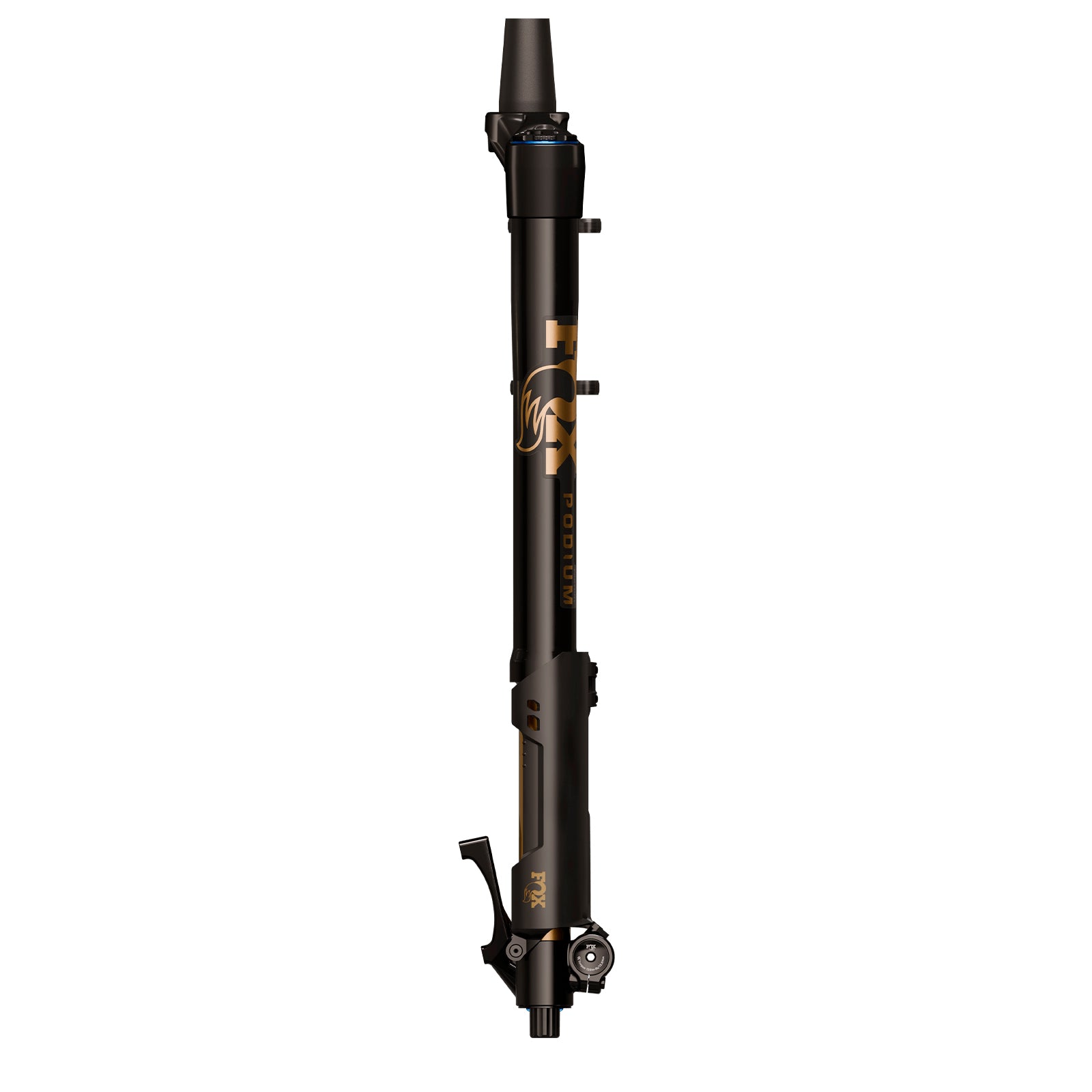
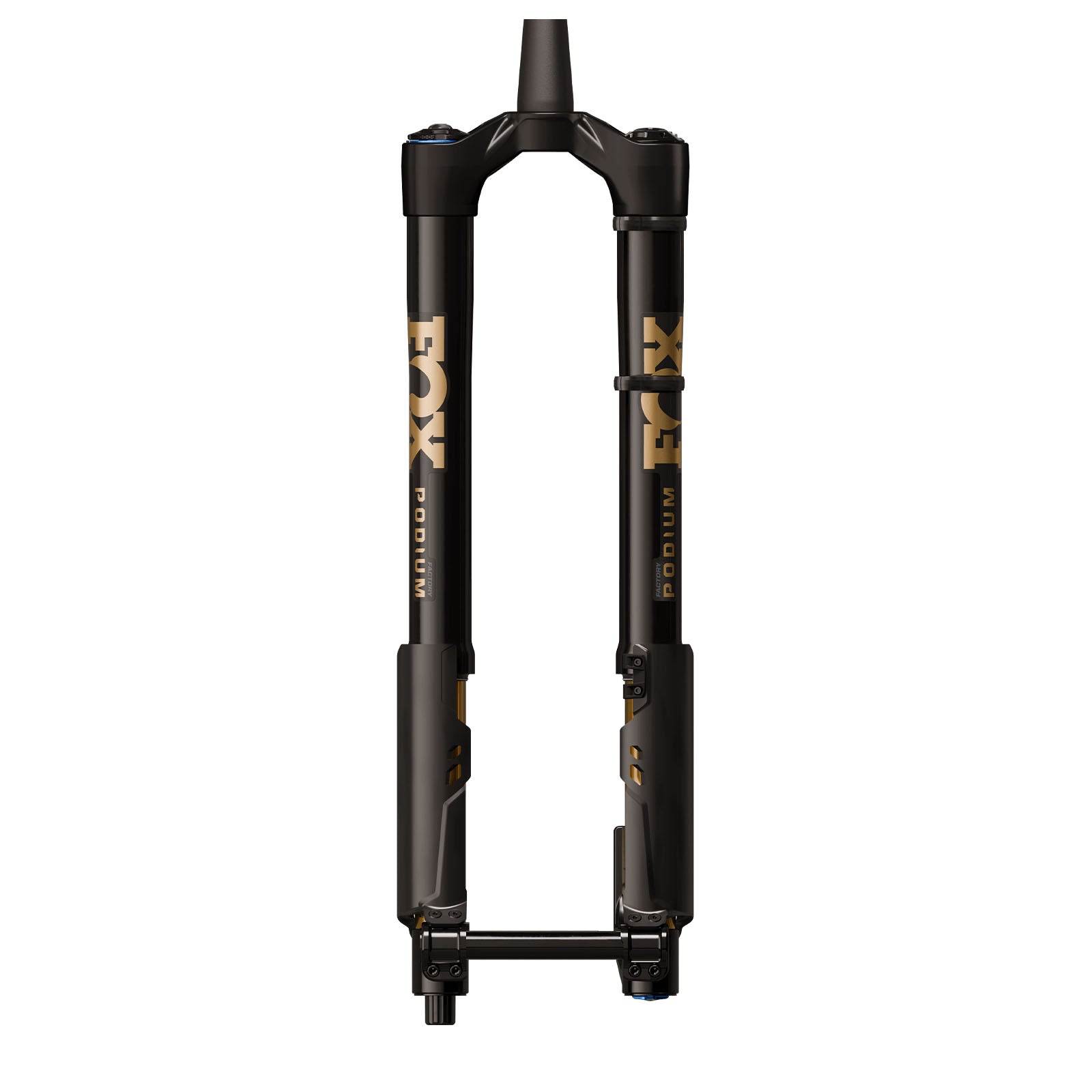
FOX 38 VS FOX PODIUM: WHICH ENDURO FORK IS RIGHT FOR YOU?

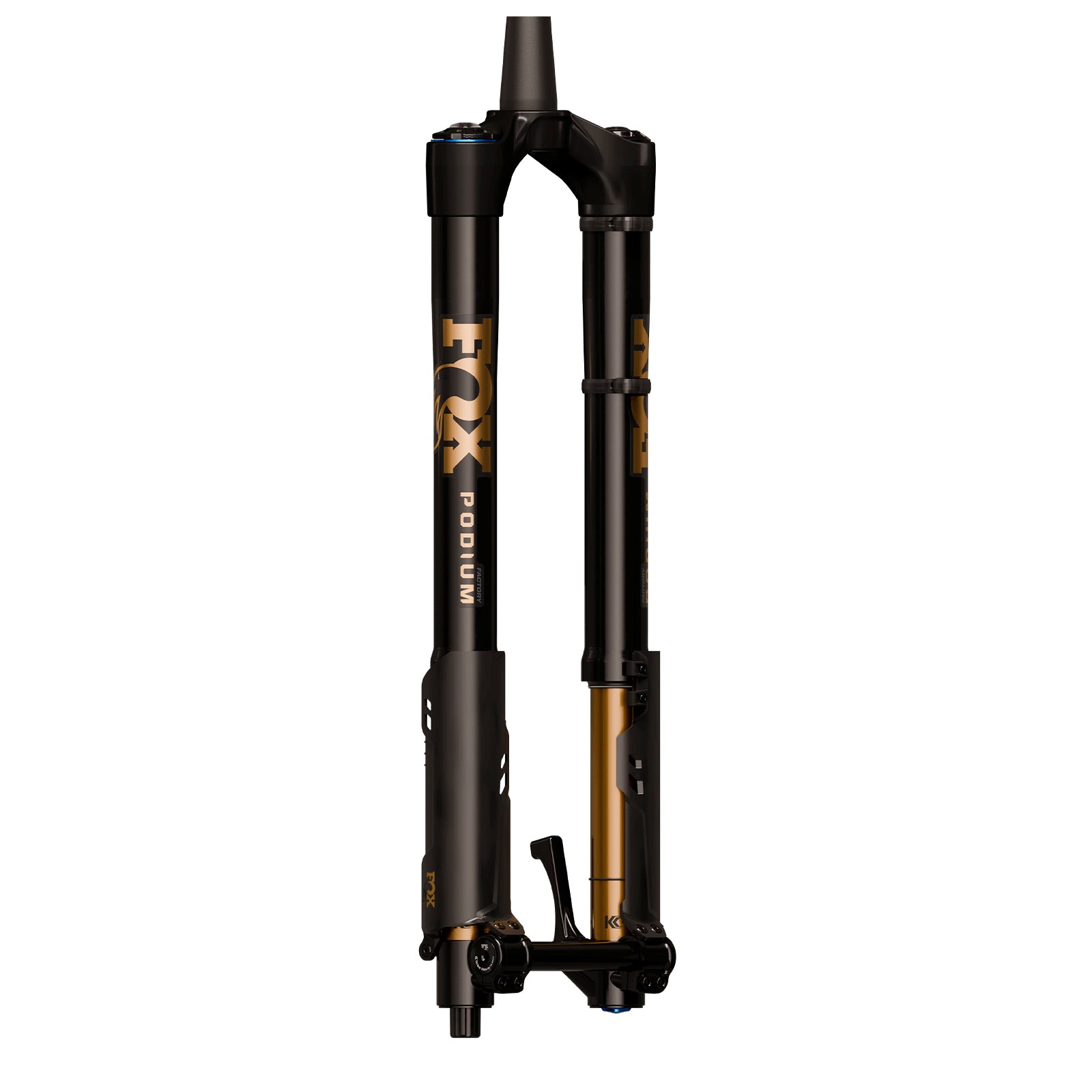
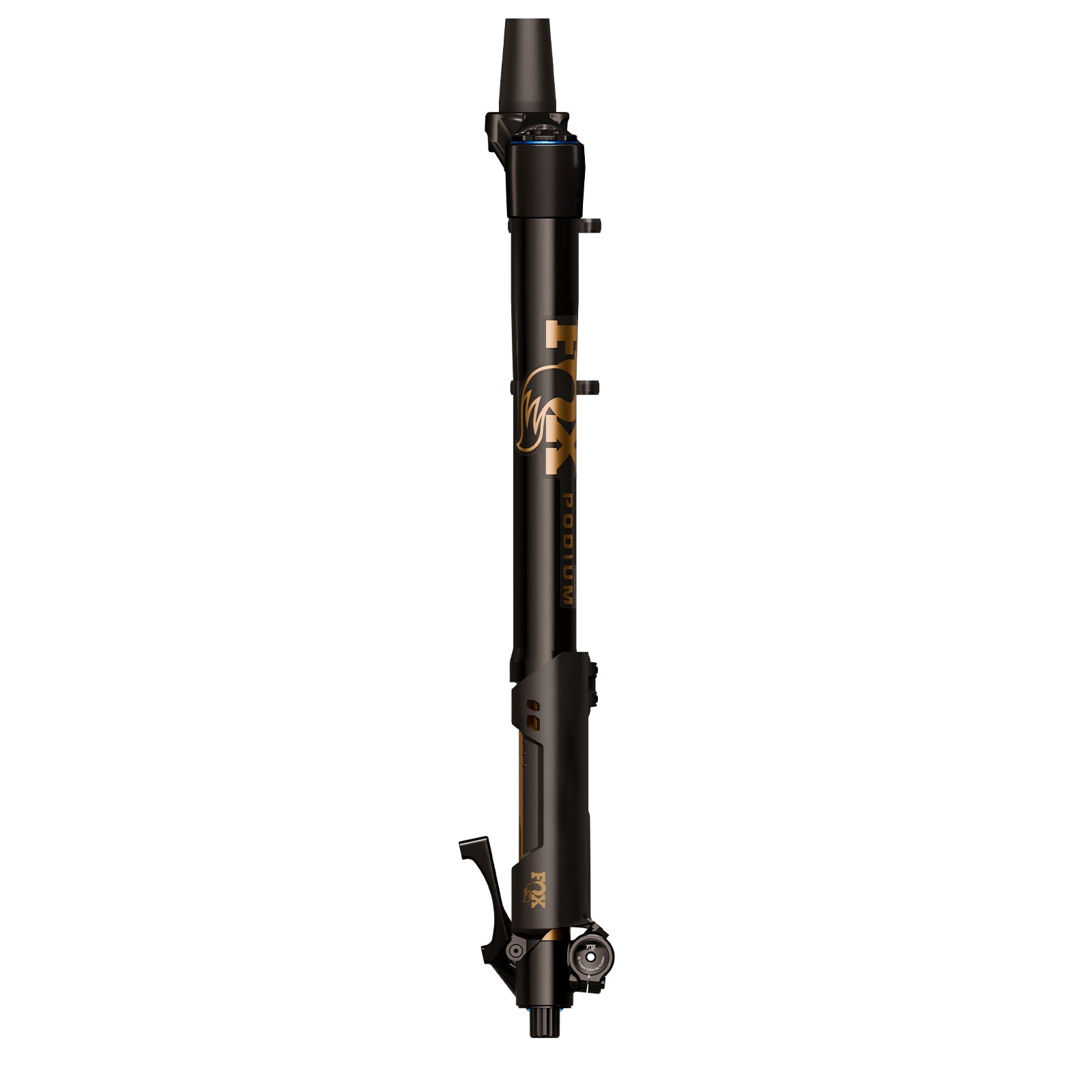
With the introduction of the inverted Podium and the updated 2026 Fox 38, riders now have two very different approaches to top-tier enduro suspension. Both forks deliver elite performance—but the differences in setup, compatibility, and ride feel can make one a better fit depending on your priorities.
INITIAL SETUP & USER EXPERIENCE
Out of the box, both forks require standard suspension setup—but the experience isn’t equal.
The Fox 38 is straightforward and familiar. Install it, set your air pressure, dial your clickers, and ride.
The Podium, on the other hand, demands more attention to detail. Between cable routing, axle setup, and air spring access, it introduces a few extra steps that can slow things down—especially if you just want a quick install.
Not difficult—but definitely more involved.
CABLE ROUTING
Cable management is one of the first noticeable differences.
Fox 38:
- Simple, proven setup with a single front-facing cable clip. Quick, clean, and easy.
Podium:
- Requires routing through three separate guides, all of which need proper alignment to avoid interference with the front wheel. Add in the need for precise brake hose length due to the inverted design, and setup becomes more finicky.
Takeaway: Fox does include alignment guides, but it’s still more time-consuming with the Podium overall.
FRONT AXLE & WHEEL COMPATIBILITY
This is a big one depending on your current setup.
Fox 38:
- Standard 15x110mm Boost axle
- Compatible with pretty much any wheel you already have in the garage!
- Quick, familiar installation
Podium:
- Uses 20x110mm Boost (DH-style) axle
- May require new hub end caps—or an entirely new front wheel depending on what you have. Brands like Hope and their Pro 5 hubs have easy to swap out end caps allowing you to go from a 15mm axel to a 20mm axel, but that isn’t the case with all brands. If your hubs don’t have swappable endcaps you may find yourself having to build a new front wheel to run the Podium. Lucky for you we have a great custom wheel builder that can help you do just that!
- Secured with DH-style pinch bolts + thru axle, requiring proper torque sequence to get proper alignment.
Takeaway: If your current hub doesn’t support 20mm conversion, upgrading to the Podium could mean additional cost and hassle. If you need a new front wheel, our Custom Wheel Builder is a great tool to get you rolling!
AIR SPRING ADJUSTMENTS & SERVICEABILITY
Another key usability difference comes when making adjustments.
Fox 38:
- Air valve located at the top of the fork
- Easy access for quick pressure changes
- Cleaner, safer to work on
Podium:
- Air valve located at the bottom of the fork
- Requires flipping the bike upside down
- Increased risk of oil escaping when attaching a pump
Takeaway: That last point matters—especially since the valve sits near your brake rotor. Contaminating pads or rotors with fork oil is something you definitely want to avoid if you like properly functioning brakes!
VOLUME SPACERS & TOOLS
Both forks require releasing air and removing the top cap to adjust volume spacers.
Podium:
- Uses a cassette lockring tool interface (nice touch if you already have one)
Fox 38:
- Uses a 32mm socket (Used to require the proprietary Fox tool, but taller notches now means a standard 32mm socket from the hardware store will work too!)
Takeaway: Neither is difficult, but both require a bit of workshop time.
WEIGHT & PRICE
Let’s be honest—if you’re considering either of these forks, weight probably isn’t your primary concern.
Still, the difference is noticeable:
Fox 38:
- ~5 lbs 9 oz (170mm)
Podium:
- ~6 lbs 1 oz (170mm)
That’s roughly half a pound lighter for the 38.
Price is where the gap really opens up:
Fox 38:
- ~$1,369
Podium:
- ~$2,099
That’s about a $730 premium for the Podium.
The reason? Manufacturing complexity. The Podium’s large-diameter, fully machined upper tubes are significantly more expensive to produce than the cast magnesium lowers used on the 38.
TRAVEL OPTIONS
Fox 38:
- 160mm / 170mm / 180mm
Podium:
- 160mm / 170mm
Takeaway: If you’re looking for a 180mm enduro or freeride setup, the 38 is your only option here.
RIDE FEEL: SUPPLE VS SUPPORTIVE
On the trail, the differences become more nuanced—and more personal.
Podium Ride Feel:
- Extremely supple off the top
- Gets into its travel very easily
- Feels planted and glued to the ground
- Requires more tuning to control mid and end stroke
Fox 38 Ride Feel:
- More mid-stroke support
- Easier to set up out of the box
- More predictable and balanced feel
- Better for popping, pumping, and playful riding
Takeaway: In our own testing, it took significantly more time to dial in the Podium—adding volume spacers and increasing compression damping to achieve the desired support. The 38, by contrast, felt closer to “right” with baseline settings right out of the box.
FINAL VERDICT: WHICH ONE SHOULD YOU CHOOSE?
Choose the Fox 38 if you:
- Want a fork that’s easy to install and set up
- Prefer a balanced, supportive ride feel
- Value compatibility with existing wheels and gear
- Don’t want to spend time constantly fine-tuning
Choose the Podium if you:
- Want maximum small-bump sensitivity and traction
- Enjoy dialing in suspension settings in detail
- Are building a no-compromise, race-focused bike
- Don’t mind extra setup time, cost, or complexity
Bottom Line
The Podium pushes performance boundaries—but it comes with tradeoffs.
The Fox 38, on the other hand, hits a sweet spot:
high-end performance, easier setup, lower cost, and broader usability.
For most riders, the 38 will be the better choice. Shop the Fox 38
For the few who want to tinker, experiment, and chase ultimate suppleness—the Podium delivers. Shop the Fox Podium